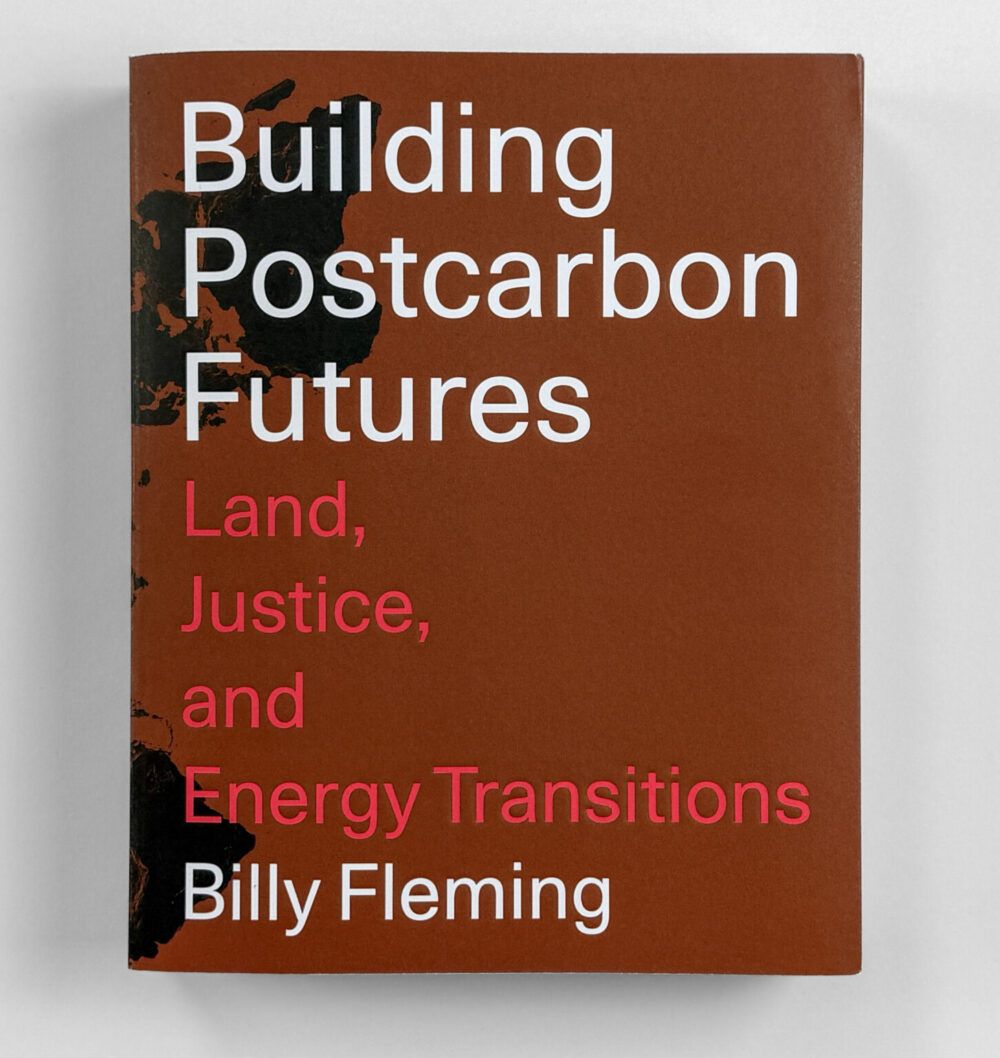
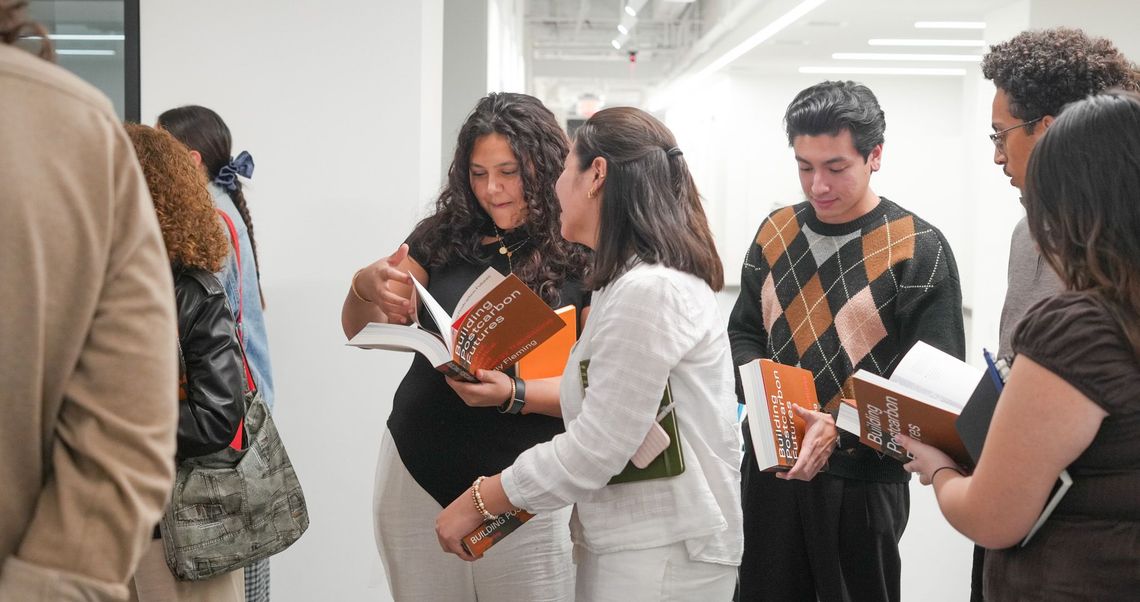
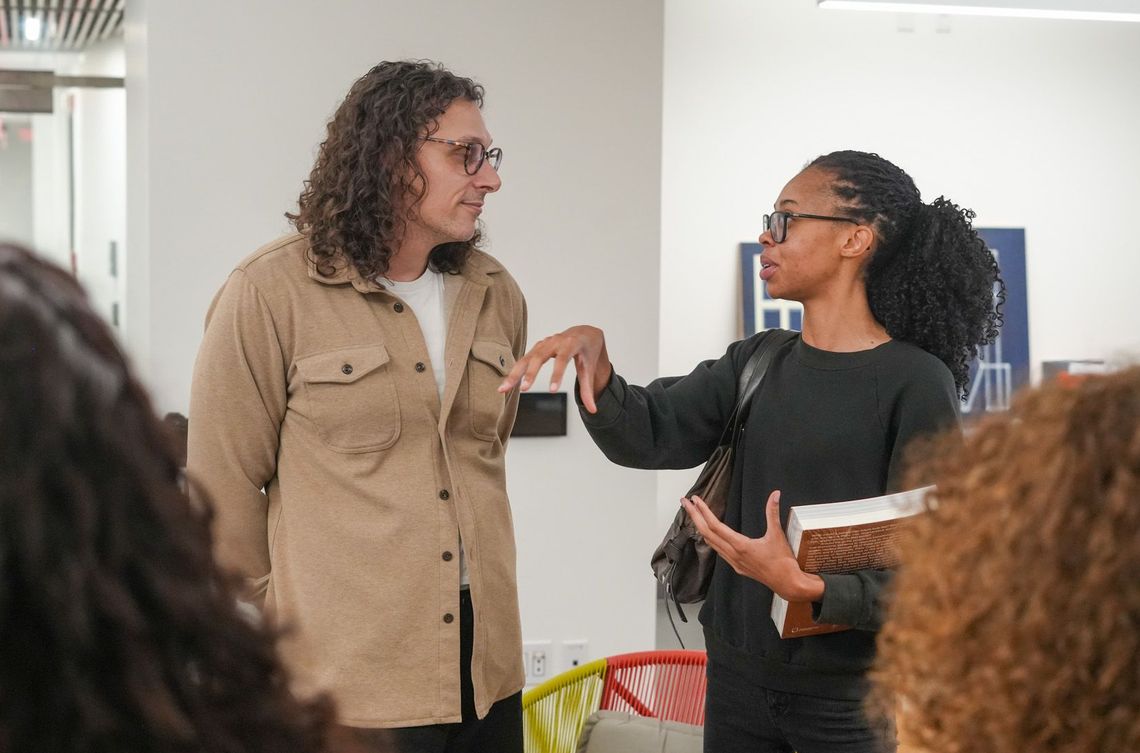
On October 15, we welcomed author Billy Fleming and writer and editor Diana Budds to our Philly office for Post Carbon Futures, the latest conversation in A Seat at Our Table. The series is inspired by WRT co-founder Ian McHarg's The House We Live In. Introduced by Charles B. Neer and moderated by Budds, the evening centered on Fleming's new book, Building Postcarbon Futures: Land, Justice, and Energy Transitions.
Watch the full conversation below.
Climate policy people can feel
Fleming argued that climate policy has to improve daily life in ways people notice. "It can't be about carbon molecules in the atmosphere. It can't be about electrons in our circuits," he said. "Those things are important. But no one's life is materially or viscerally better because those things are different." What does help, he said, is work like weatherizing homes and replacing gas stoves with electric appliances.
An atlas of what is already working
The book documents 29 projects across 43 nations and six continents, narrowed from more than 300 nominations. Roughly two thirds have no professional designer attached. They include a community land trust in San Juan, Puerto Rico, a First Nation owned geothermal plant in Canada, and Aboriginal-led fire management in Australia's West Arnhem Land.
The role of design
In many of these projects, design arrived after decades of community organizing. "We're the last ones to touch a place," Fleming said. "No one's reinventing the wheel here. They're just fighting for things and winning them."
Asked by Neer what designers can do differently, Fleming urged firms to be deliberate about which work they pursue, which they refuse, and what they do with the revenue it brings in. Budds pointed to housing, where she sees "opportunities for architects and landscape architects to show that vision and make it really appealing."
Why it matters
For WRT's planners, urban designers, architects, and landscape architects, these questions shape work across parks, neighborhoods, and housing, where ownership and access determine whether climate action also advances equity. "We want to use our practice as a convening platform," Neer said, for conversations "above the level of projects."
"That larger theme of collective ownership of the built environment is the thing within all of these projects in the book that makes them successful," said Fleming.
About the book and speakers
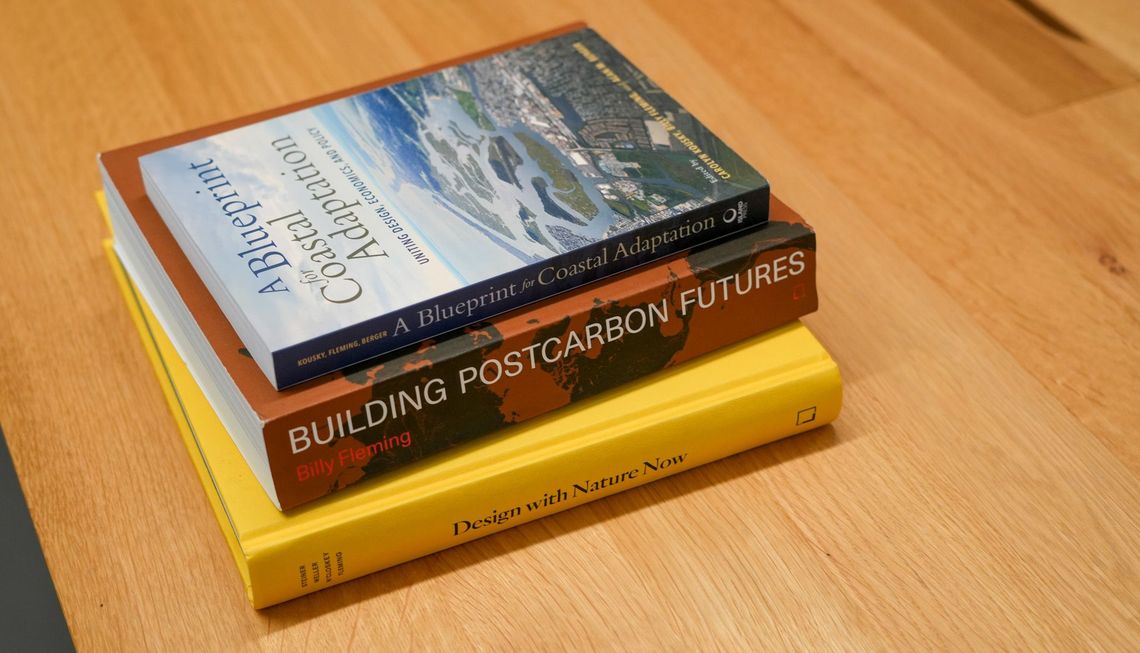
Building Postcarbon Futures: Land, Justice, and Energy Transitions (Lincoln Institute of Land Policy, August 2026) includes contributions from more than a dozen scholars working on climate justice.
Billy Fleming is founding codirector of the Climate and Community Institute and assistant professor of landscape architecture at Temple University's Tyler School of Art and Architecture.
Diana Budds is a New York based writer, editor, and critic whose work has appeared in The New York Times, Fast Company, and Metropolis.