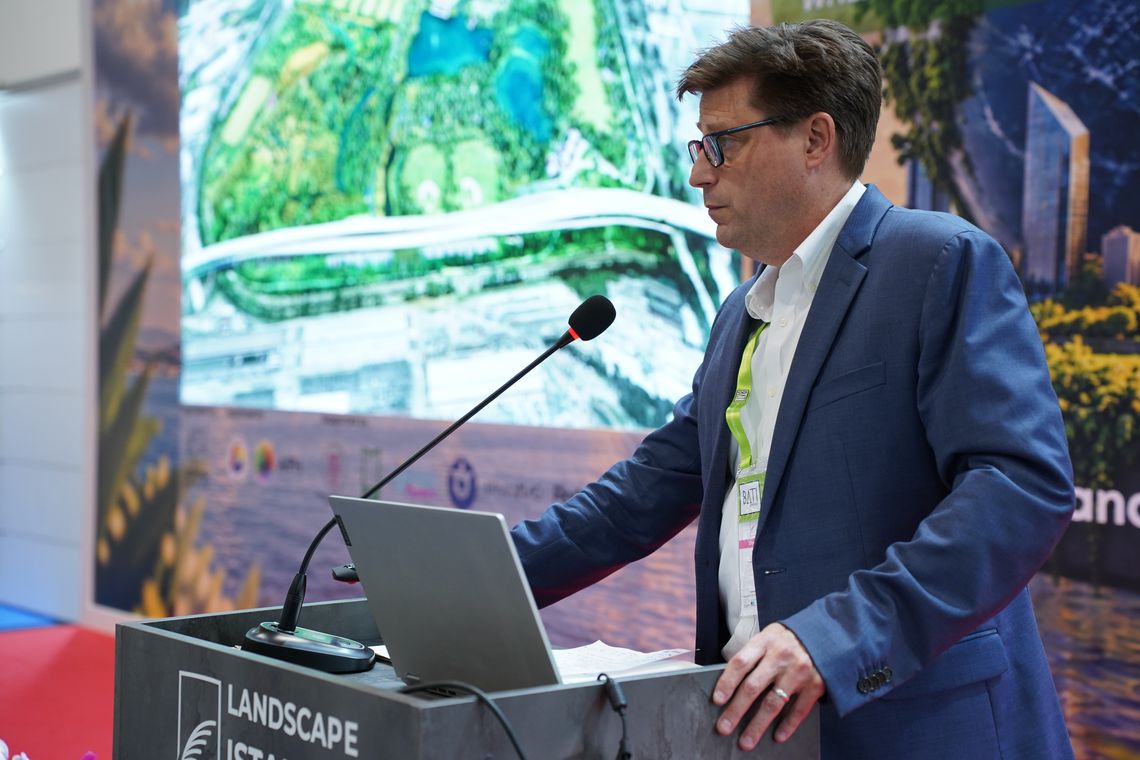
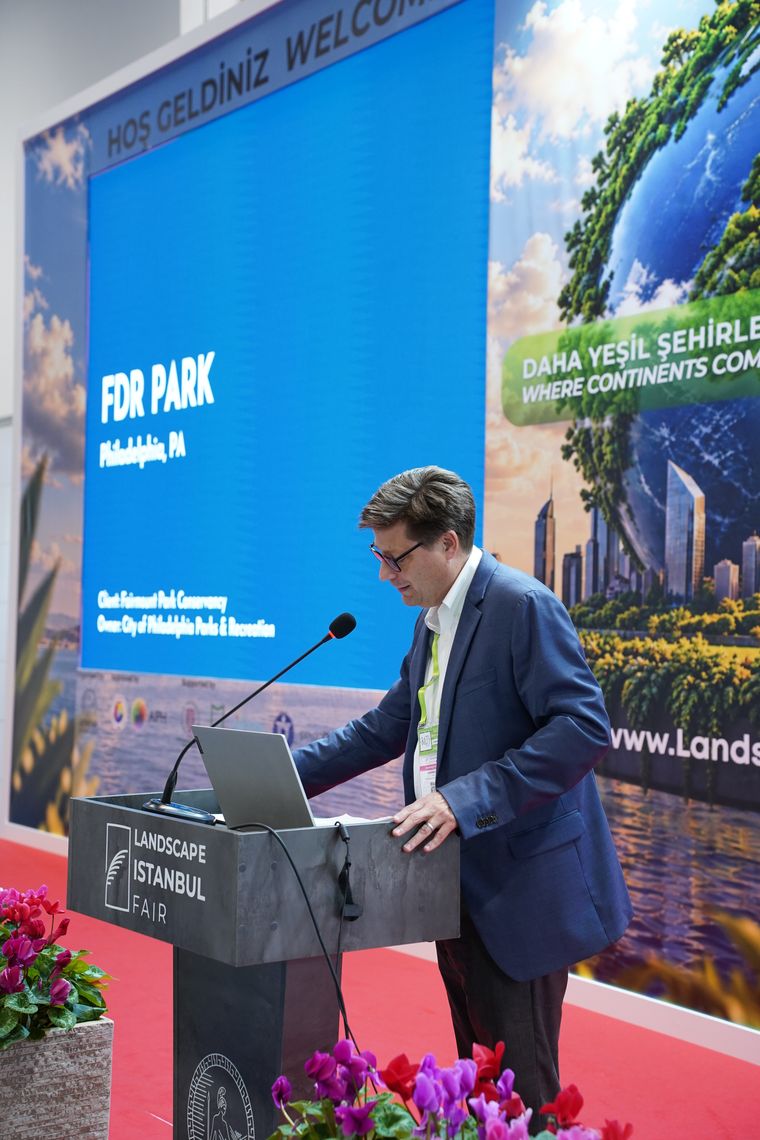
How do you carry a 1914 Olmsted Brothers park into a changing climate? WRT's Charlie Neer took that question to Istanbul, Türkiye, where he presented the FDR Park Plan at the World Urban Parks Symposium 2026, held October 7-9 at the Landscape Istanbul Fair.
This year's theme, The Living Legacy, asked parks leaders from around the world how the wisdom of the past can shape the next generation of urban parks. FDR Park offers a direct answer.
Three goals, one plan
Charlie's presentation centered on the plan's three guiding goals:
Restore the function. Nature-based solutions manage water, improve ecological health, and measure the park's resilience over time.
Reclaim the vision. The plan works within the Olmsted Brothers' original framework and design intent, adapted for a modern audience.
Renew the impact. Strategic investment in a shared civic asset can connect people of all backgrounds and build trust across communities.
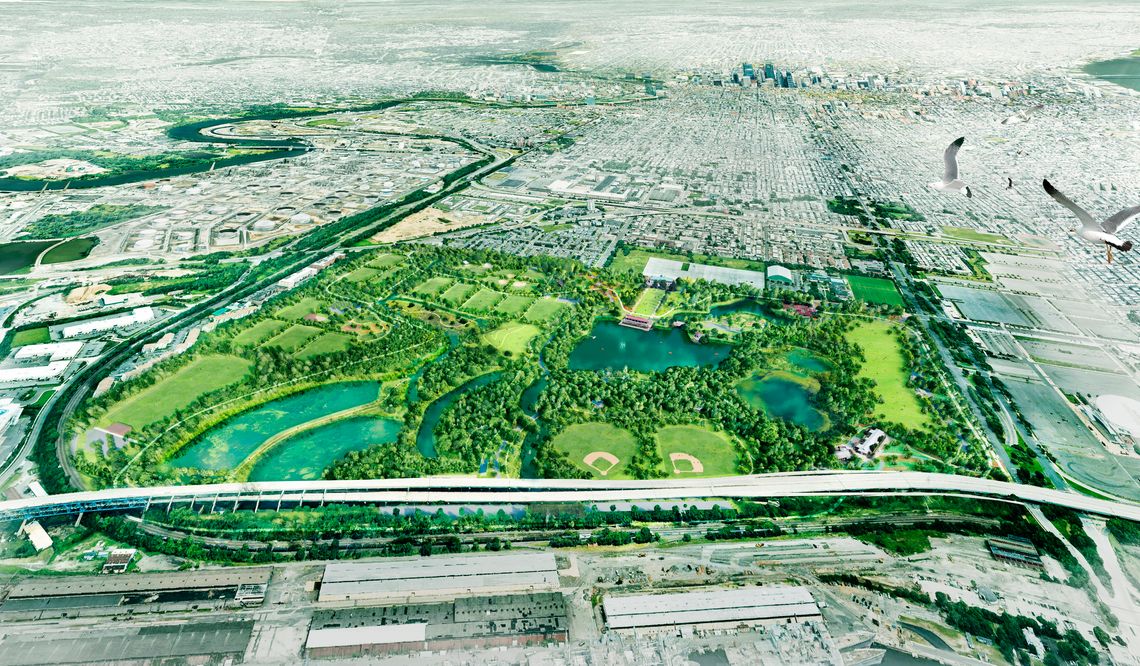
To balance these goals, the team tested three alternatives that each pushed one theme to its limit: activity, nature, or water. A "Finding the Balance" exercise weighed each against community priorities and site conditions. The final plan organizes the park into two zones: an Ecological Core that manages water, provides habitat, and connects visitors to nature, and an Urban Edge with new athletic fields and signature playgrounds.
Shaped by the people who use it
As the most heavily used park in South Philadelphia, FDR Park required an engagement process that reached all of its users. Over a year of planning, the team engaged more than 3,000 community members through surveys, community meetings, more than 30 stakeholder events, a mobile planning booth, and five park ambassadors. Materials and interpretation were offered in seven languages, with focused outreach to recent immigrants, non-English speakers, youth, and seniors through trusted community-based organizations.
A historic park facing new pressures
Designed by the Olmsted Brothers, the 348-acre FDR Park serves as the backyard for 170,000 South Philadelphia residents and draws more than 4 million visitors a year. It is also a low-lying landscape facing persistent flooding, aging infrastructure, user conflicts, and limited amenities.
Working with Fairmount Park Conservancy and Philadelphia Parks & Recreation, WRT developed the FDR Park Plan to address those challenges together rather than one at a time. The result is Philadelphia's largest public-facing investment in climate resilience.
From plan to place
Implementation is well underway. The first phase delivered the Anna C. Verna Playground, a 33-acre wetland, a new Gateway Plaza, and the adaptive reuse of the park's historic guardhouse as its first welcome center. A flexible framework guides the next 15 to 20 years of investment as funding and priorities shift.
FDR Park shows how a historic landscape can become critical civic and public health infrastructure. Grounded in its past and shaped by its community, the park is being prepared to serve the next generation of Philadelphians.