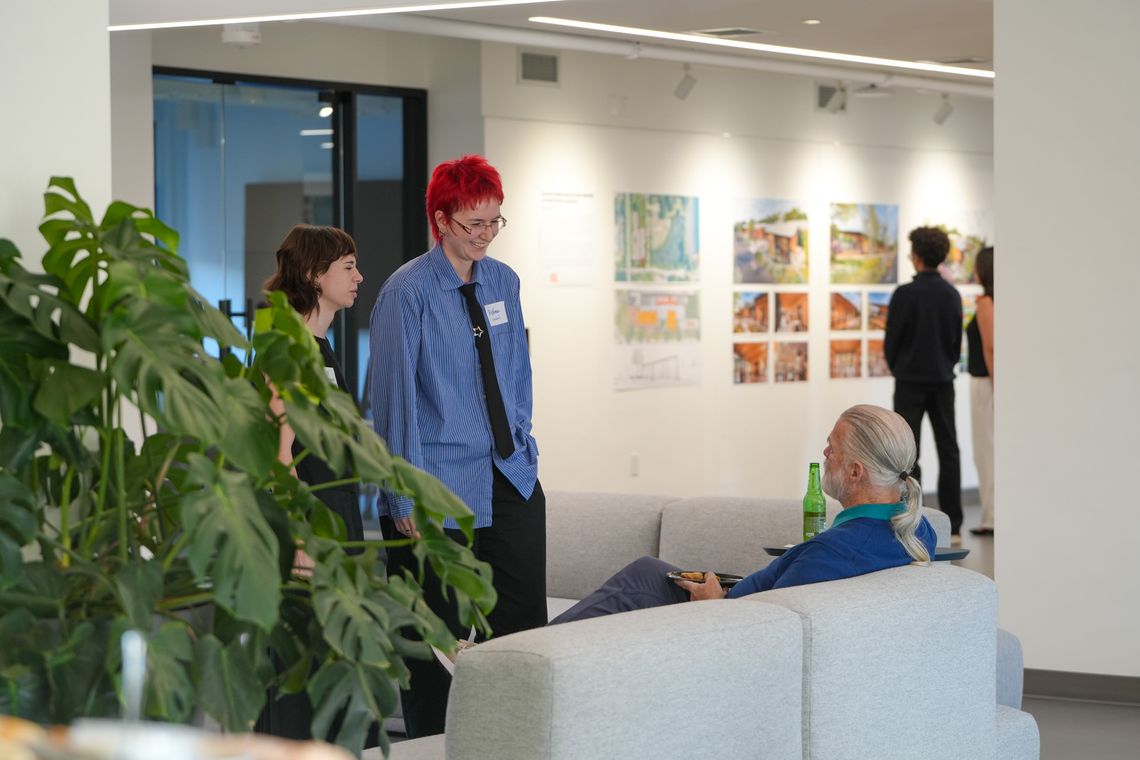
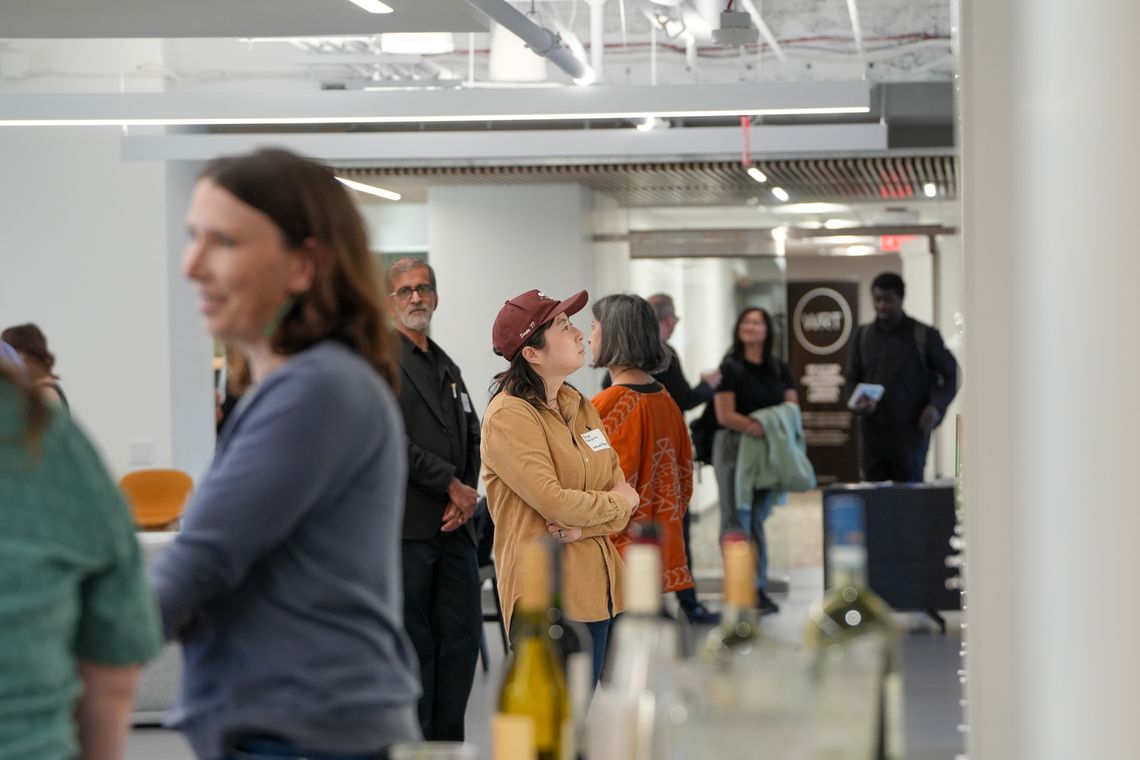
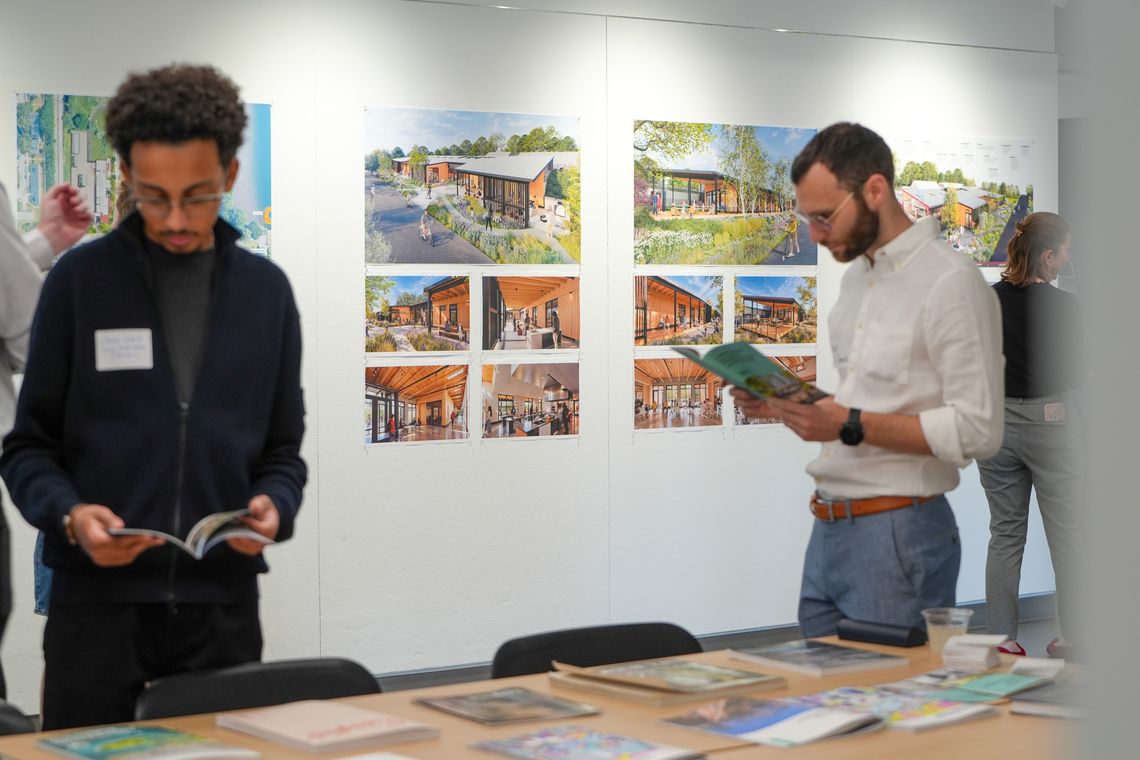
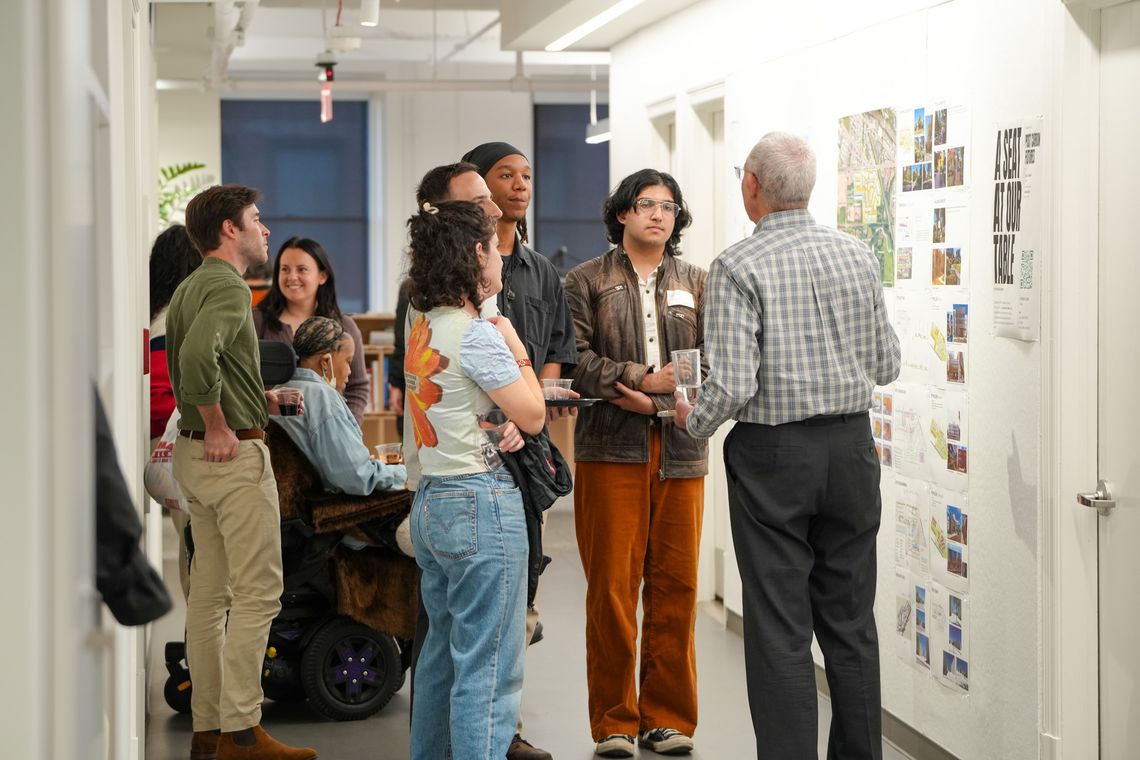
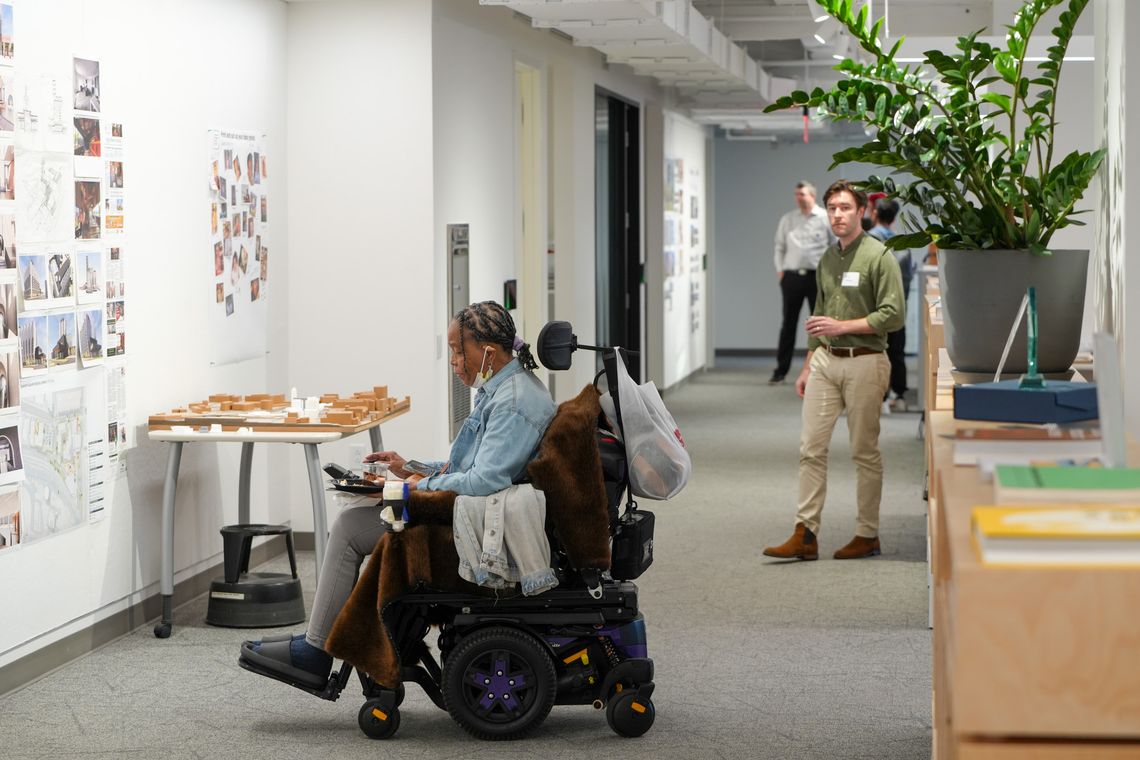
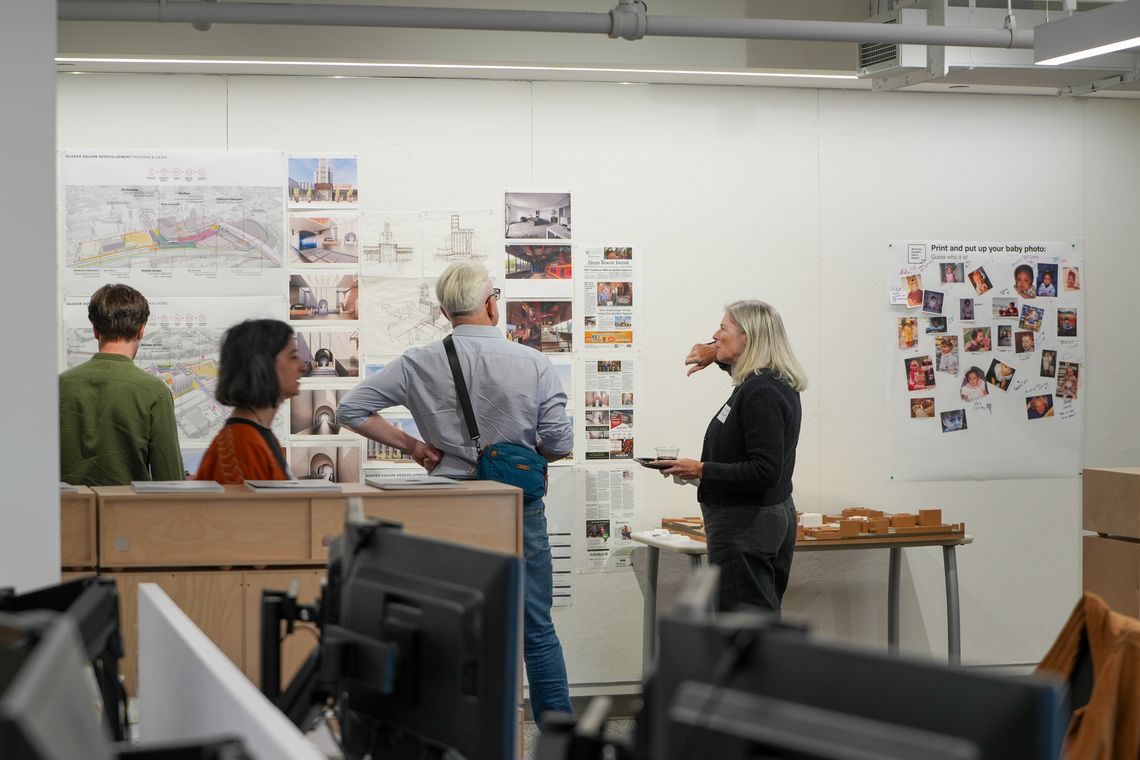
On the evening of October 8, our Philly office filled with designers, partners, neighbors, and a strong showing of landscape, architecture, and planning students from local universities. The open house was part of the 2026 DesignPhiladelphia Festival, and it invited guests to explore how parks, gardens, schools, and community spaces can become places for discovery, connection, and change.
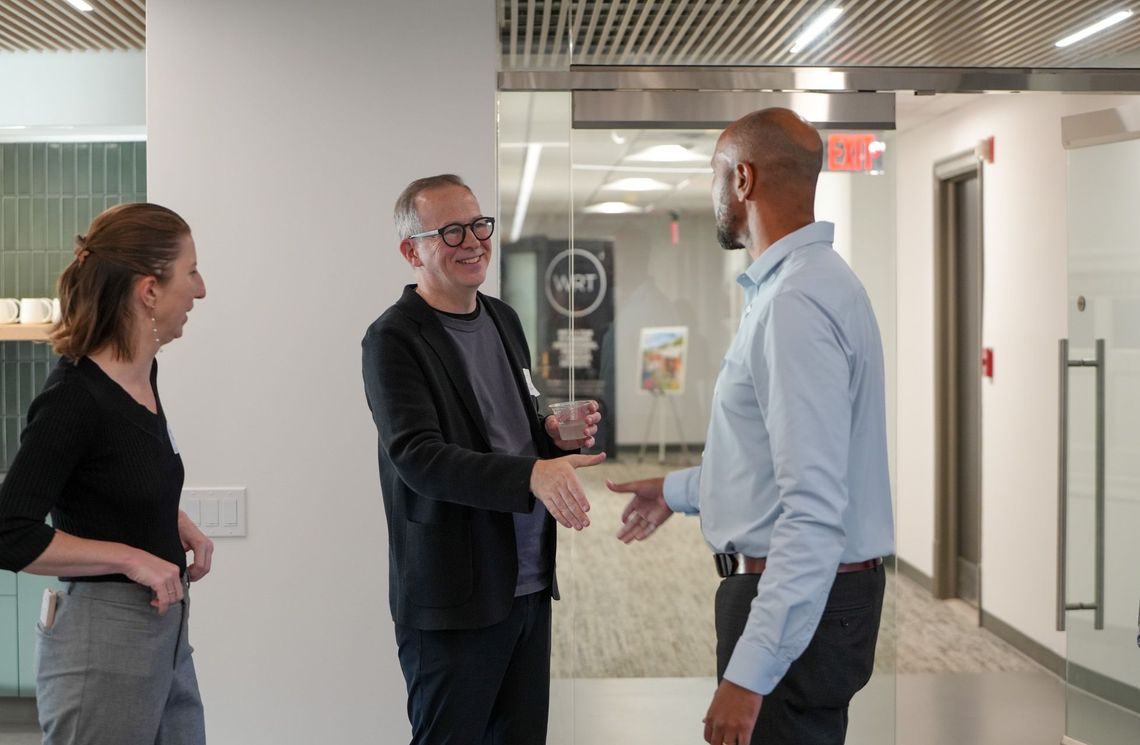
Richard King, Principal, greeting guests at the front door.
Across the region, public landscapes do more than provide green space. They are where people learn about the ecosystems around them, gather with neighbors, and see what a more resilient future could look like. WRT’s approach to this work traces back to Ian McHarg’s Design with Nature: the idea that planning and design should respond to ecological realities rather than work against them. Richard describes the same idea in practice as “being responsive to the qualities of the environment around us instead of bending the environment to our will.”
3 projects, 3 ways of working together
The evening centered on FDR Park, Bartram’s Garden, and The Watershed Institute. Richard notes that all three share a focus on ecology, education, and resilience, and that all three will make a real difference close to home. Seen side by side, they also show how WRT’s disciplines trade roles.
“These projects demonstrate the different ways architecture and landscape architecture can collaborate, with each discipline taking on different roles depending on the needs of the project,” said Lauren Powers, Architect + Senior Associate. “At FDR, landscape architecture led the effort; at Bartram’s, architecture took the lead; and at Watershed, the collaboration seems to have been more evenly balanced.”
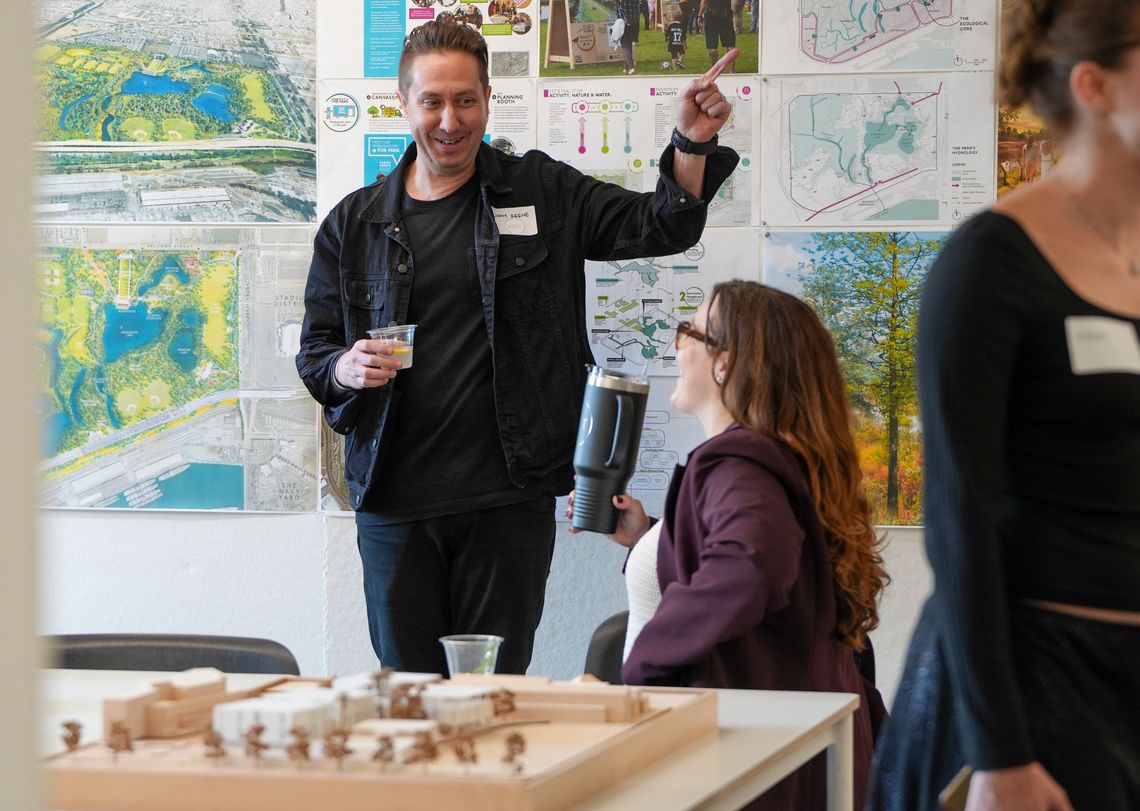
At FDR Park, working with the Fairmount Park Conservancy and Philadelphia Parks and Recreation, the new master plan offers a once in a generation opportunity to reimagine a historic Olmsted park to serve 21st Century Philadelphians. This plan leverages the power of parks to provide access to recreational opportunities, spur local economies, and protect Philadelphia from climate change. From the new Gateway Plaza, to the Welcome Center, through to a new playground, landscape architecture was an integral component to the design and implementation of this ecologically resilient, community-supported vision for the future of FDR. The FDR Park Plan brings nature, water and human activity into balance in one unified system.
At Bartram’s Garden, architecture takes the lead on a new Education Center, and it drew the most questions of the night. “Many people wanted to know if the project at Bartram’s Garden was real and when it would be built,” said Amelia Einbender-Lieber, Associate + Architect, who helped organize the event and is on the design team. “There was a lot of excitement about the project as a new community asset for the garden.” She pointed to the building’s relationship with the landscape around it. “For Bartram’s Garden there is a very strong connection and relationship between the indoor and outdoor spaces. I think that this design is made stronger because we are working together in the same office.”
At The Watershed Institute, architecture and landscape architecture worked as more equal partners. “The Watershed Institute is an immersive learning experience for all ages,” said Theresa Starrs, Associate + Architect. “Through the campus planning process, we had a lot of conversations around how to make the physical watershed more apparent to visitors. Ideas ranged from interactive signage to more subtle changes in materials or bridges over waterways to give indication of the watershed at work.” Guests were especially curious about the ecological evaluation of the 950-acre site led by WRT’s consultant, Biohabitats.
“Together, they highlight our flexibility, the strength of our interdisciplinary approach, and our ability to draw on each other’s expertise in different capacities,” Lauren said.
Learning in both directions
Students made up much of the room, and they came ready to dig in. “I spoke with a lot of landscape, architecture, and planning students from local universities,” Amelia said. “The students were very engaged with the work and asked a lot of questions.” Guests who already knew these places were excited to see what is changing. For WRT, those conversations were a useful mirror. As Theresa put it, the public sees WRT “as a collaborative firm that works from planning to architectural and landscape implementation.”
Why it matters
“Much of what I see in work today is putting nature and the city back together again,” Richard said. “Approaches to zoning and uses of past eras pulled these things apart, disrupting the restorative connections that nature grants us.”
Each of these places is designed to restore those connections, offering what Richard calls “respite, relief and a space apart.” Together they make the case that access to nature is essential infrastructure for the region, and that it is best delivered when planners, landscape architects, and architects work through the problem together.
Richard left guests with a question worth carrying forward: How can we get more of this kind of work to happen in Philadelphia?
Thank you to everyone who joined us, to our partners at FDR Park, Bartram’s Garden, The Watershed Institute, and Biohabitats, and to DesignPhiladelphia. “We love to share our work and our spaces, either formally or informally,” Lauren said, “and would be happy to host visitors any time who are in the area and want to check out our spaces and what we’re doing.”